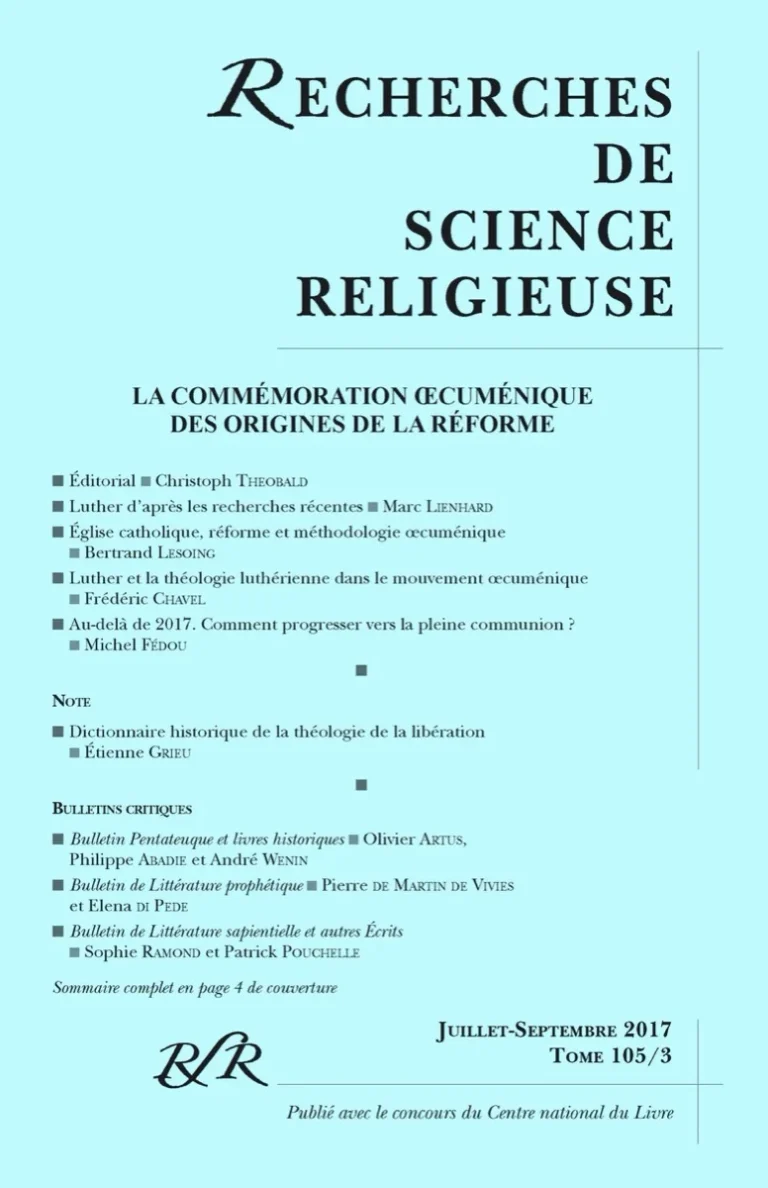
Luther et la théologie luthérienne dans le mouvement oecuménique
Bilan des avancées réalisées et évaluation des obstacles à surmonter
Frédéric CHAVEL
Luther et la théologie luthérienne sont deux choses bien distinctes, et doivent l’être plus encore dans un âge oecuménique. Les simplifications du confessionnalisme ont laissé la place à un travail de reconstruction critique, à la fois entre Églises luthériennes séparées par des divisions, entre Églises de la Réforme, ou dans le cadre du dialogue luthérien-catholique. De remarquables acquis méthodiques ainsi que thématiques ont été atteints, ouvrant la voie à des communions ecclésiales. Comment faut-il aborder les points d’achoppement qui demeurent ?
Luther and Lutheran theology are two quite distinct things and should be even more so in an oecumenical age. The simplifications of confessionalism have ceded the way to critical reconstruction, between Lutheran Churches separated by divisions, between Reformation Churches, or within the framework of Lutheran-Catholic dialogue. Remarkable methodological and thematic gains have been made that open the path to communions between Churches. How should we approach the stumbling blocks that subsist ?
Sommaire
Bulletins critiques
ce numéro
à la revue